
Protein Molecular Weight Markers

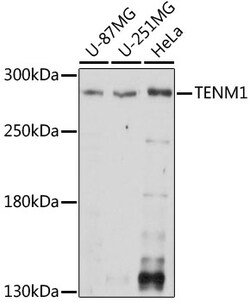
ABclonal Technology TENM1 Rabbit pAb

The protein encoded by this gene belongs to the tenascin family and teneurin subfamily. It is expressed in the neurons and may function as a cellular signal transducer. Several alternatively spliced transcript variants encoding different isoforms have been found for this gene.

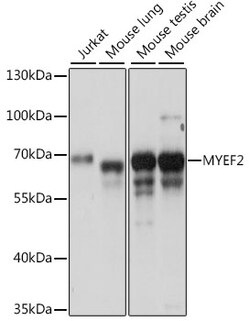
ABclonal Technology MYEF2 Rabbit pAb
Enables RNA binding activity. Involved in myotube differentiation and neuron differentiation. Located in nucleus.
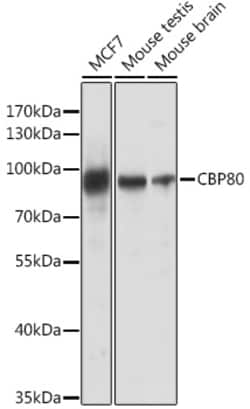
ABclonal Technology CBP80 Rabbit pAb
The product of this gene is a component of the nuclear cap-binding protein complex (CBC), which binds to the monomethylated 5 cap of nascent pre-mRNA in the nucleoplasm. The encoded protein promotes high-affinity mRNA-cap binding and associates with the CTD of RNA polymerase II. The CBC promotes pre-mRNA splicing, 3-end processing, RNA nuclear export, and nonsense-mediated mRNA decay.
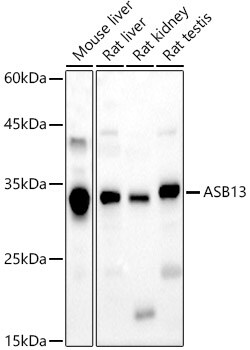
ABclonal Technology ASB13 Rabbit pAb
The protein encoded by this gene is a member of the ankyrin repeat and SOCS box-containing (ASB) family of proteins. They contain ankyrin repeat sequence and a SOCS box domain. The SOCS box serves to couple suppressor of cytokine signalling (SOCS) proteins and their binding partners with the elongin B and C complex, possibly targeting them for degradation. Multiple alternatively spliced transcript variants, both protein-coding and not protein-coding, have been described for this gene.
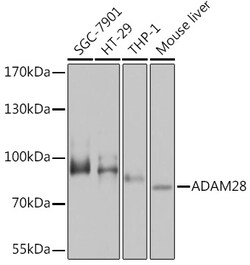
ABclonal Technology ADAM28 Rabbit pAb
This gene encodes a member of the ADAM (a disintegrin and metalloprotease domain) family. Members of this family are membrane-anchored proteins structurally related to snake venom disintegrins, and have been implicated in a variety of biological processes involving cell-cell and cell-matrix interactions, including fertilization, muscle development, and neurogenesis. The protein encoded by this gene is a lymphocyte-expressed ADAM protein. This gene is present in a gene cluster with other members of the ADAM family on chromosome 8. Alternative splicing results in multiple transcript variants.
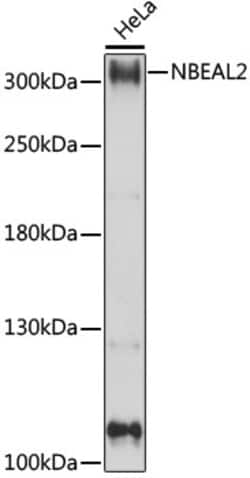
ABclonal Technology NBEAL2 Rabbit pAb
The protein encoded by this gene contains a beige and Chediak-Higashi (BEACH) domain and multiple WD40 domains, and may play a role in megakaryocyte alpha-granule biogenesis. Mutations in this gene are a cause of gray platelet syndrome.
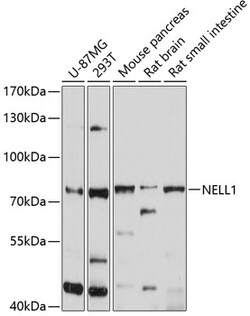
ABclonal Technology NELL1 Rabbit pAb
This gene encodes a cytoplasmic protein that contains epidermal growth factor (EGF)-like repeats. The encoded heterotrimeric protein may be involved in cell growth regulation and differentiation. A similar protein in rodents is involved in craniosynostosis. Alternative splicing results in multiple transcript variants.
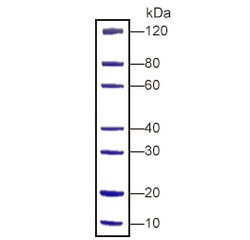
Genscript Corporation PAGE-MASTER Protein Standard (for SDS-PAGE)
PAGE-MASTER Protein Standard (for SDS-PAGE) is a protein standard specially designed by GenScript. It consists of seven bands with molecular weight of 10 kD, 20 kD, 30 kD, 40 kD, 60 kD, 80 kD and 120 kD. All bands are highly purified, thus exhibit excellent performance in SDS-PAGE gels.

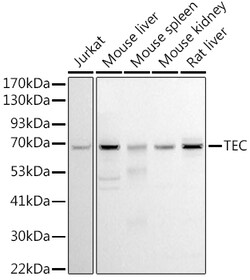
ABclonal Technology Tec Rabbit pAb
The protein encoded by this gene belongs to the Tec family of non-receptor protein-tyrosine kinases containing a pleckstrin homology domain. Tec family kinases are involved in the intracellular signaling mechanisms of cytokine receptors, lymphocyte surface antigens, heterotrimeric G-protein coupled receptors, and integrin molecules. They are also key players in the regulation of the immune functions. Tec kinase is an integral component of T cell signaling and has a distinct role in T cell activation. This gene may be associated with myelodysplastic syndrome.

Crescent Chemical Co Inc PROTEIN TEST MIXTURE 6 FOR SDS
Protein Test Mixture 6 for SDS PAGE Molecular weight markers for SDS gel electrophoresis.Reconstitute with SDS sample buffer (125 mM Tris-HCl pH 6.8, 2 % SDS ,15 % glycerol, 10 mM DTT, 0.025 % bromophenol blue, 0.025 % Orange G) to final concentration of 1 mg/ml and apply 5 µl per
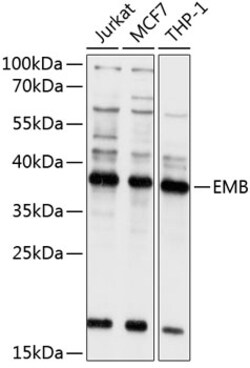
ABclonal Technology EMB Rabbit pAb
This gene encodes a transmembrane glycoprotein that is a member of the immunoglobulin superfamily. The encoded protein may be involved in cell growth and development by mediating interactions between the cell and extracellular matrix. A pseudogene of this gene is found on chromosome 1.
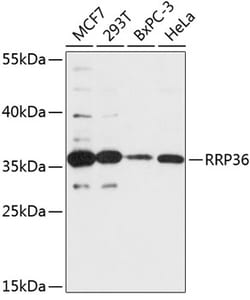
ABclonal Technology RRP36 Rabbit pAb
RRP36 functions at an early stage in the processing of 35S preribosomal RNA into the mature 18S species (Gerus et al., 2010 [PubMed 20038530]).
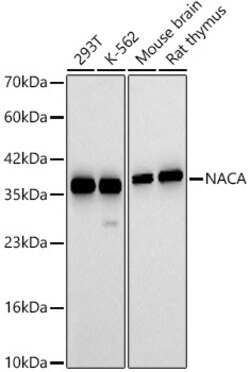
ABclonal Technology NACA Rabbit pAb
This gene encodes a protein that associates with basic transcription factor 3 (BTF3) to form the nascent polypeptide-associated complex (NAC). This complex binds to nascent proteins that lack a signal peptide motif as they emerge from the ribosome, blocking interaction with the signal recognition particle (SRP) and preventing mistranslocation to the endoplasmic reticulum. This protein is an IgE autoantigen in atopic dermatitis patients. Alternative splicing results in multiple transcript variants, but the full length nature of some of these variants, including those encoding very large proteins, has not been determined. There are multiple pseudogenes of this gene on different chromosomes.
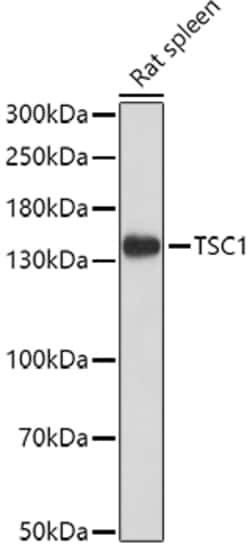
ABclonal Technology TSC1 Rabbit pAb
This gene is a tumor suppressor gene that encodes the growth inhibitory protein hamartin. The encoded protein interacts with and stabilizes the GTPase activating protein tuberin. This hamartin-tuberin complex negatively regulates mammalian target of rapamycin complex 1 (mTORC1) signaling which is a major regulator of anabolic cell growth. This protein also functions as a co-chaperone for Hsp90 that inhibits its ATPase activity. This protein functions as a facilitator of Hsp90-mediated folding of kinase and non-kinase clients, including TSC2 and thereby preventing their ubiquitination and proteasomal degradation. Mutations in this gene have been associated with tuberous sclerosis and lymphangioleiomyomatosis.
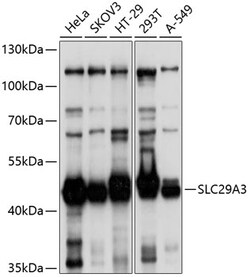
ABclonal Technology SLC29A3 Rabbit pAb
This gene encodes a nucleoside transporter. The encoded protein plays a role in cellular uptake of nucleosides, nucleobases, and their related analogs. Mutations in this gene have been associated with H syndrome, which is characterized by cutaneous hyperpigmentation and hypertrichosis, hepatosplenomegaly, heart anomalies, and hypogonadism. A related disorder, PHID (pigmented hypertrichosis with insulin-dependent diabetes mellitus), has also been associated with mutations at this locus. Alternatively spliced transcript variants have been described.